
Local SEO Services UK: How to Reach and Attract Local Customers Online
Did you know that 46 percent of Google searches have local intent and 76 percent of “near me” queries result in a visit within 24 hours? Small businesses in Hampshire, Surrey and Berkshire often struggle to turn online visibility into footfall and enquiries. This guide explains how local SEO transforms searchers into customers by optimising web and Google Business Profile listings, targeting geo-specific keywords and leveraging mobile and voice trends. You will discover:
- The fundamentals and benefits of local SEO for UK SMEs
- Step-by-step Google Business Profile optimisation tactics
- Proven regional strategies for Hampshire, Surrey and Berkshire
- Broader local marketing channels beyond SEO
- Measurement frameworks and ROI analysis
- Answers to common local search questions
- Emerging trends in UK local search behaviour
The Growing Importance of Local Search and “Near Me” Queries
Recent data indicates that 46% of all Google searches have local intent, with a significant 76% of “near me” queries leading to a physical store visit within 24 hours. The popularity of “near me” searches, particularly those including “can I buy,” has seen a remarkable increase of over 500% in the past five years, highlighting a strong consumer desire for immediate, local solutions.
This research directly supports the article’s opening claims about the prevalence of local search intent and the urgency of “near me” queries, underscoring why local SEO is essential for attracting nearby customers.
By following these sections, you will master the techniques that ensure nearby customers find and choose your business online.
What Is Local SEO and Why Is It Essential for UK Small Businesses?
Local SEO optimises your online presence to attract customers in a defined geographic area, improving visibility on search engines and maps to drive footfall and enquiries.
This approach boosts local search rankings by aligning website content and business listings with user intent, delivering measurable benefits such as higher call volumes, website traffic and in-store visits.
Effective local SEO prevents small businesses from being overshadowed by national competitors and capitalises on mobile and voice searches that dominate UK consumer behaviour. Understanding these foundations sets the stage for practical optimisation steps and regional strategies.
How Does Local SEO Improve Local Search Rankings in the UK?
Local SEO improves rankings by combining on-page signals, business listings and off-page citations to build relevance and trust in Google’s local algorithms. Key mechanisms include:
- Accurate Name, Address, Phone (NAP) consistency across directories
- Localised content using geo-modified keywords (e.g., “web design Hampshire“)
- High-authority backlinks from local websites and industry associations
These elements work together to increase prominence in the Google Local Pack and organic results, driving more clicks and visits from nearby searchers.
What Are the Key Elements of Local SEO for Small Businesses?
The core ingredients of a robust local SEO strategy include:
- NAP Consistency – Ensures Google recognises your business details across platforms.
- Business Citations – Listings on directories like Yell and Bing Places build authority.
- Geo-Targeted Keywords – Incorporate town and county names into service pages.
- Optimised Website Structure – Create location pages and schema-friendly content.
To implement these elements on your site and launch a tailored local SEO campaign, complete our local SEO services to request a customised proposal.
How Does Mobile and Voice Search Impact Local SEO?
Mobile and voice queries prioritise immediacy and conversational language, making it vital to:
- Design responsive websites for fast load times on smartphones
- Use natural question-style headings to capture voice search requests
- Provide clear “Call” and “Directions” buttons to meet user needs
Mobile Search Dominance and the Rise of Voice Assistants in the UK
A substantial 78% of local mobile searches culminate in an offline purchase, demonstrating the direct link between mobile online activity and in-store visits. In the UK, voice search is gaining significant traction, with approximately 40% of adults using voice search daily, and 46% of users performing voice searches for local business information on a daily basis.
This information validates the article’s points on the critical importance of mobile optimisation and adapting to conversational queries for voice search to capture on-the-go customers.
Embracing mobile-first and voice-friendly content ensures your business appears when prospects seek services on the go, cementing local relevance.
How to Optimise Your Google Business Profile for Maximum Local Visibility
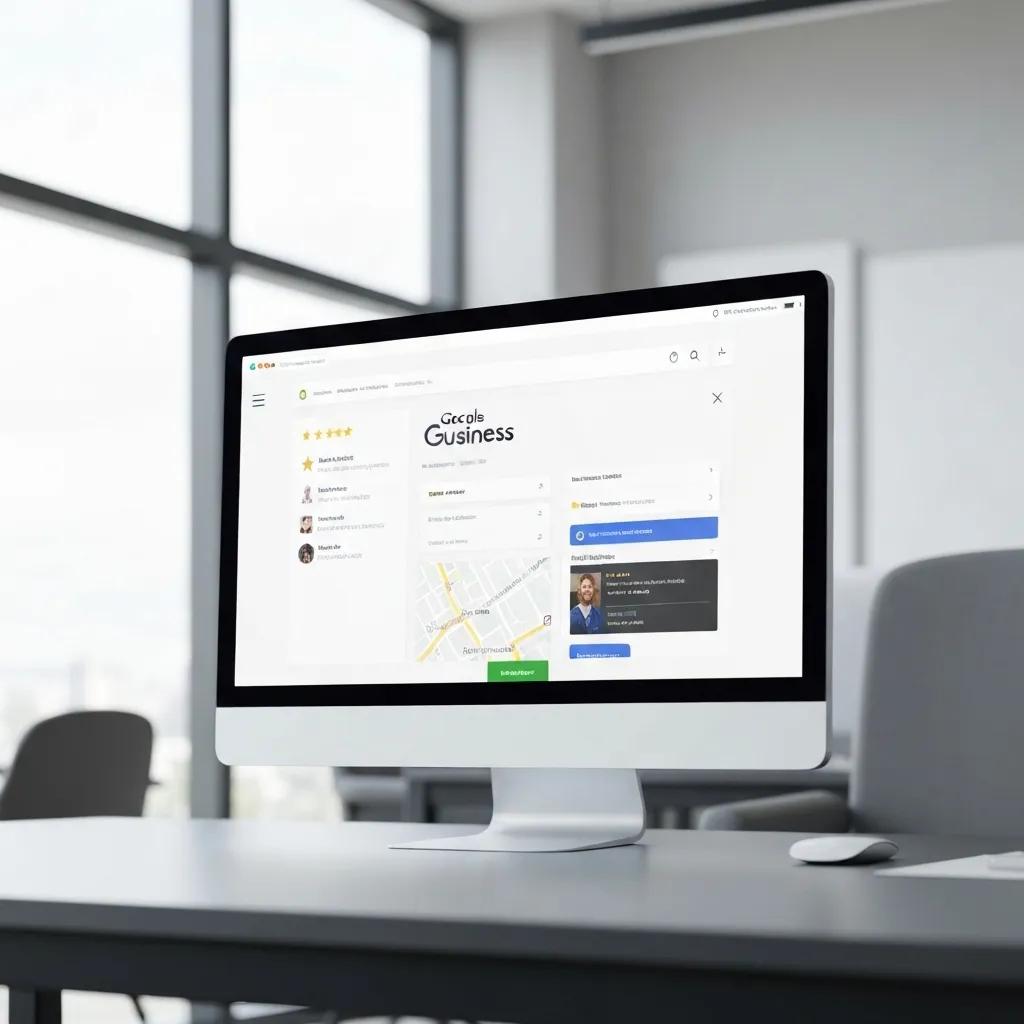
An optimised Google Business Profile (GBP) listing directly influences local search prominence on Google Search and Maps by signalling relevance and engagement to nearby customers. Complete profiles often receive 70 per cent more click-throughs and calls.
Impact of Google Business Profile Optimisation and Customer Reviews
Businesses with comprehensive and well-optimised Google Business Profile (GBP) listings are 2.7 times more likely to attract engagement, such as clicks and calls, and receive five times more views on Google Maps. Furthermore, online reviews play a critical role in consumer decision-making, with 87% of customers consulting them before choosing a local business.
These findings reinforce the article’s emphasis on optimising customer reviews as key strategies for enhancing local visibility and building trust.
What Are the Steps to Set Up and Verify Your Google Business Profile?
Setting up GBP involves:
- Claiming Your Listing – Search your business name on Google and select “Own this business?”
- Providing Accurate Details – Enter NAP, services, categories and opening hours.
- Uploading High-Quality Images – Showcase your storefront, products and team.
- Verifying Your Address – Request a postcard code or phone verification.
A verified profile establishes trust and unlocks advanced features like Posts, messaging and insights.
How Can You Manage and Respond to Customer Reviews Effectively?
Managing reviews strengthens credibility and rankings by:
- Acknowledging Positive Feedback – Thank customers promptly to encourage loyalty.
- Addressing Negative Reviews – Offer solutions or apologies to demonstrate responsiveness.
- Encouraging Reviews – Use in-store prompts or follow-up emails to build review volume.
Consistent review management boosts trust signals and local algorithm performance.
What Are the Best Practices for Google Business Profile Posts and Updates?
Regular GBP Posts engage searchers by:
- Sharing promotions, events or blog highlights at least weekly
- Including clear calls to action, such as “Book Now” or “Learn More”
- Using seasonal or local hashtags to expand reach
Active posting signals freshness and authority, enticing customers to engage with your business.
How Do Google Business Profile Insights Help Measure Local Success?
GBP Insights track performance metrics like:
| Metric | Definition | What It Reveals |
|---|---|---|
| Search Views | Number of times your profile appears | Visibility trends over time |
| Map Views | Instances users see your listing on Maps | Local map prominence |
| Website Clicks | Clicks through to your website | Interest in your offerings |
| Calls & Directions | User actions for contact or route planning | Engagement from potential visitors |
Regularly reviewing these insights highlights high-impact tactics and guides optimisation priorities for sustained growth.
How to Integrate WhatsApp and AI Features with Your Google Business Profile?
Integrate direct messaging and AI-driven responses by:
- Linking your WhatsApp Business number in the Contact section
- Enabling the “Messaging” feature and setting AI-powered autoresponders
- Using AI to answer FAQs instantly, reducing response time and improving satisfaction
These integrations create seamless communication channels that convert inquiries into bookings more efficiently.
What Local SEO Strategies Drive More Customers to Small Businesses in Hampshire, Surrey, and Berkshire?

Regional optimisation focuses on hyper-local relevance by tailoring content and outreach to specific towns and counties. Targeted strategies help stand out in competitive local markets and attract nearby customers actively searching for your services.
How to Conduct Local Keyword Research for UK Small Businesses?
Effective local keyword research involves:
- Analysing “Near Me” Queries – Identify high-volume phrases like “web designer near me”.
- Using Geo Modifiers – Combine services with towns (e.g., “Surrey café SEO”).
- Researching Competitor Keywords – Discover gaps in local content and topics.
Prioritise terms with clear commercial intent to maximise ROI from local search traffic.
What On-Page SEO Techniques Boost Local Search Rankings?
On-page local SEO relies on:
- Location Pages – Create dedicated pages for each service area with unique content.
- Title Tags & Meta Descriptions – Include town names and primary keywords.
- Localised Content – Mention landmarks, client success stories and regional events.
These techniques strengthen geographic signals and encourage Google to serve your site for relevant local queries.
How Does Local Link Building and Citation Management Work?
Local link building and citations enhance domain authority by:
- Partnering with Community Sites – Sponsor local events or join business associations.
- Listing on Niche Directories – Submit to UK-focused platforms like Yell, Scoot and Thomson Local.
- Maintaining Citation Consistency – Audit and correct any NAP discrepancies across listings.
Building a network of reputable local references amplifies trust and ranking power.
Why Is Mobile Optimisation Crucial for Local Search Success?
Mobile-optimised sites improve local conversions by:
- Accelerating Page Load – Fast mobile pages reduce bounce rates.
- Enhancing UX – Clear menus and click-to-call buttons meet on-the-go user needs.
- Prioritising Core Content – Surface essential local information above the fold.
With over 70 per cent of UK searches on mobile, responsiveness is non-negotiable for local visibility.
How to Optimise for Voice Search and Conversational Queries?
Voice search optimisation requires:
- Using Question-Style Headers – Align headings with natural speech patterns.
- Including Long-Tail Phrases – Embed full questions like “where can I find a local web designer?”.
- Providing Direct Answers – Offer concise, snippet-ready responses in the first 50 words.
These tactics ensure your content surfaces in voice assistant results and smart speaker searches.
Which Local Online Marketing Strategies Are Most Effective for Small Businesses?
Beyond SEO, complementary channels amplify local reach and engagement by meeting potential customers on multiple platforms and touchpoints.
How Do Google Local Service Ads Help Attract Nearby Customers?
Google Local Service Ads connect service businesses with local buyers by:
- Bidding on Service Categories – Your ad appears above organic results.
- Pay-Per-Lead Model – Only pay for genuine customer enquiries.
- Google Guarantee Badge – Builds trust and increases click-through rates.
These ads capture high-intent prospects actively searching for local services.
How Can Social Media Be Used for Local Customer Engagement?
Social platforms boost local awareness through:
- Location-Targeted Ads – Use postcode and radius targeting on Facebook and Instagram.
- Geo-Tagged Posts – Highlight events or promotions in specific towns.
- Local Community Groups – Participate in neighbourhood forums to build relationships.
Combining organic engagement with paid local ads cultivates a loyal local following.
What Role Does Email Marketing Play in Reaching Local Customers?
Email marketing drives repeat business and referrals by:
- Segmenting by Region – Send tailored offers to subscribers in Hampshire, Surrey or Berkshire.
- Highlighting Local Events – Promote workshops, open days or seasonal discounts.
- Including Clear CTAs – Encourage visits with “Book Now” and “Visit Us” prompts.
Consistent, localised emails reinforce brand recall and motivate returns.
What Are Hyperlocal Marketing Techniques for Targeted Local Reach?
Hyperlocal tactics focus on micro-areas within a community:
- Geofencing Campaigns – Serve ads when users enter defined GPS zones.
- Flyer Distribution – Combine offline and online coupons for footfall tracking.
- Local Influencer Partnerships – Collaborate with community figures for authentic endorsements.
These precise tactics drive awareness and conversions in narrowly defined neighbourhoods.
How to Measure and Track the Success of Your Local Online Marketing Efforts?
Effective measurement ties marketing activities to business outcomes, enabling continuous improvement and budget optimisation.
What Are the Key Local SEO KPIs and Metrics to Monitor?
Track these performance indicators:
- Local Pack Rank – Position in the top three map listings for target keywords
- GBP Actions – Calls, direction requests and website clicks from your profile
- Organic Traffic Growth – Increase in sessions from geo-targeted queries
- Review Volume & Rating – Number of new reviews and average star score
Monitoring these metrics reveals which tactics deliver the best local impact.
Which Tools Are Best for Tracking Local Search Performance?
Recommended platforms include:
| Tool | Purpose | Strength |
|---|---|---|
| Google Search Console | Organic ranking and traffic | Free insights into queries and pages |
| Google Business Profile Dashboard | Profile engagement metrics | Direct view and map analytics |
| BrightLocal | Local rank tracking and audits | Citation management and competitor data |
| Semrush Local SEO | Keyword rank monitoring | Comprehensive keyword and backlink data |
These tools provide visibility into local search behaviour and competitive benchmarks.
How to Calculate the ROI of Local Marketing Campaigns?
To calculate ROI:
- Assign Value to Goals – Define lead value for calls, forms or visits.
- Track Campaign Costs – Sum ad spend, content creation and management fees.
- Compare Revenue vs Spend – Subtract total costs from revenue attributed to local channels and divide by spend.
ROI analysis highlights the most profitable local strategies and informs budget allocation.
What Are Common Questions About Reaching Local Customers Online?
Understanding common queries helps shape content and capture People Also Ask opportunities, driving featured snippet appearances.
What Is the Google Local Pack and How Can You Appear in It?
The Google Local Pack is the map-based result at the top of local searches. You can appear in it by:
- Verifying and optimising your Google Business Profile
- Ensuring NAP consistency and relevant categories
- Earning reviews and local backlinks to boost authority
Ranking in the Local Pack significantly increases visibility and click volume.
How Do Online Reviews Influence Local Customer Decisions?
Online reviews act as social proof, with 87 per cent of customers reading feedback before choosing a local business. Positive reviews and timely responses build trust, while overall ratings factor heavily into local search rankings.
How Does Local SEO Compare to Traditional Marketing for Small Businesses?
Local SEO offers measurable, search-driven leads and 24/7 visibility at a lower cost per acquisition than print or radio ads. Traditional marketing casts a wide net, whereas local SEO precisely targets users actively seeking services in your area.
How Can Small Businesses in the UK Stay Updated on Local SEO Trends?
Stay informed by:
- Following the Google Search Central Blog for algorithm updates
- Subscribing to local SEO newsletters from BrightLocal and Semrush
- Participating in local business associations and networking events
Continuous learning ensures your local marketing tactics evolve alongside search engine changes.
How Has Local Search Behaviour Changed in the UK and What Does It Mean for Your Business?
Local search in the UK has shifted towards mobile, voice and AI-driven experiences, demanding faster websites, conversational content and deeper data analysis to maintain competitive advantage.
What Are the Latest UK Local Search Statistics and Consumer Behaviours?
Recent data shows:
- A 500 per cent increase in local “near me” searches over five years
- 78 per cent of local mobile searches result in offline purchases
- Nearly 50 per cent of UK adults use voice assistants for local queries
These trends highlight the importance of mobile speed, voice-friendly content and in-store readiness.
How Is AI and Voice Search Changing Local Customer Engagement?
AI features like Google’s AI-mode in GBP surface instant answers and suggested actions, while voice assistants prioritise concise, conversational responses. Adapting content to these formats ensures your business remains discoverable and user-friendly.
Why Is Structured Data Important for Local Business Visibility?
Structured data provides search engines with explicit information about your business—such as address, opening hours and services—enhancing rich result eligibility and reinforcing local relevance in search and map listings.
Contact SO Web Designs today to harness professional local SEO services that boost your visibility in Hampshire, Surrey and Berkshire and turn online searches into loyal customers.